Menopause symptoms
Weight gain
Nothing changed, except everything fits differently. Midlife weight gain is driven by more than willpower, and it tends to land in a new place.
See if you’re eligibleFree clinician review. If treatment is not right for you, you pay nothing.
Why this happens
Falling estrogen shifts where the body stores fat, from hips and thighs toward the abdomen.
Muscle mass declines with age unless it is actively maintained, and muscle is what burns energy at rest.
Broken sleep raises appetite hormones, which makes eating patterns harder to hold.
- ~1.5 lbper year is the average midlife gain reported in the SWAN study, independent of menopause status.
- Where, not just how much— fat distribution shifts toward the middle.
- Muscle first— resistance training protects the tissue that drives resting metabolism.
What can help
A licensed clinician reviews your health history and decides whether treatment is appropriate for you. These are the options women with this symptom are most often prescribed at HerEstrogen.
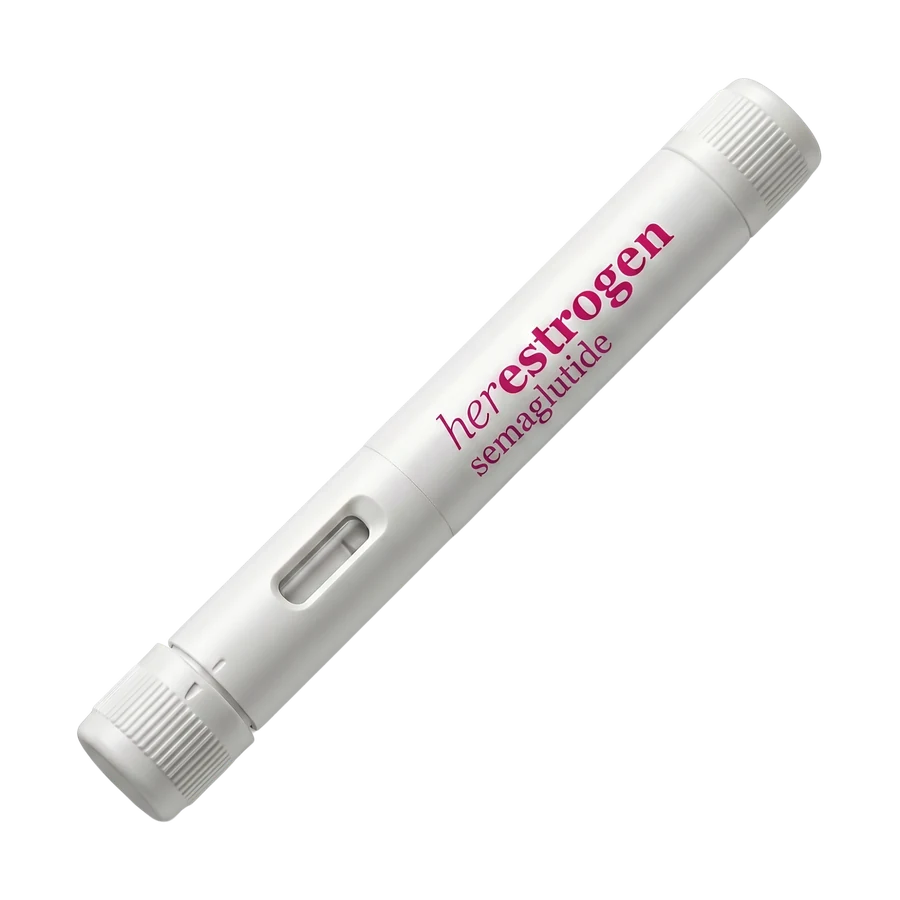 Weekly GLP-1 ShotRxA once-weekly GLP-1 injection.
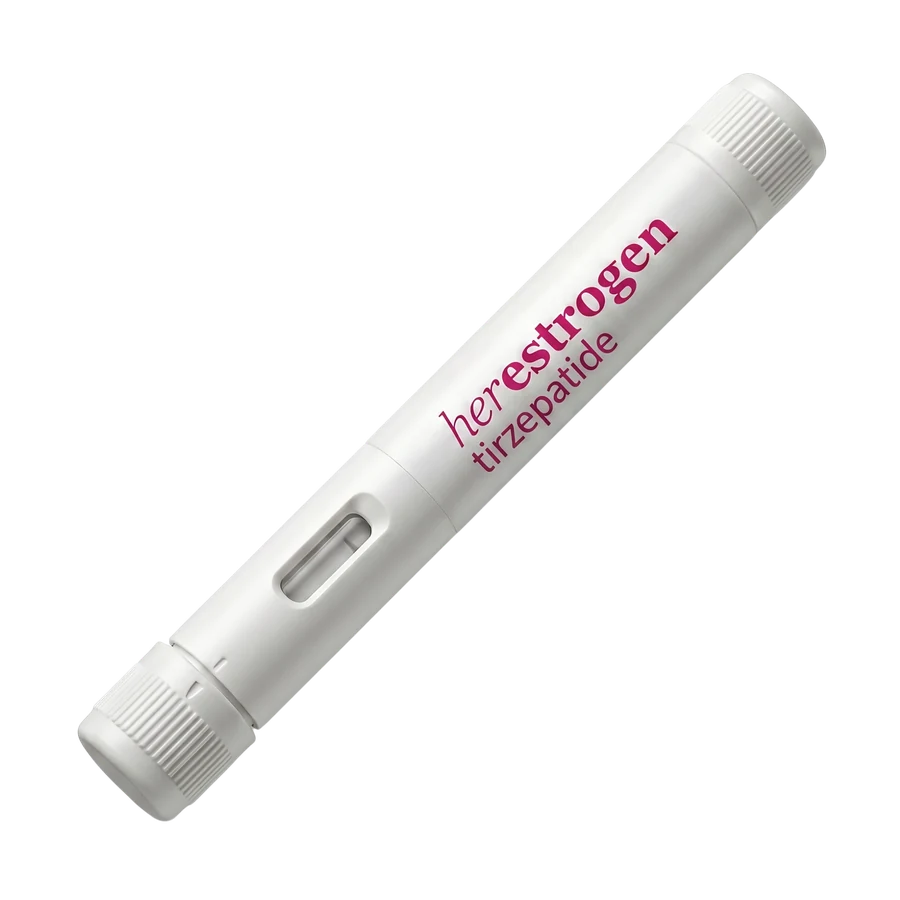 Weekly Dual-Action ShotRxA once-weekly GLP-1/GIP injection.
 Twice-Weekly PatchesRxEstradiol delivered through the skin, changed twice a week.
Alongside treatment
- Resistance training two or three times a week protects muscle mass better than cardio alone.
- Protein at each meal supports that same goal.
- Thyroid problems also become more common in midlife and can look identical — worth ruling out.
Questions women ask
Does hormone therapy cause weight gain?
Hormone therapy is not prescribed for weight loss, and it is not established as a cause of weight gain. Midlife weight change has several drivers, which is why a clinician reviews the whole picture.
Are GLP-1 medications right for me?
That is a clinical decision. A licensed clinician reviews your health history, your BMI and your other medications before determining whether a GLP-1 is appropriate.
Find out what is right for you
Answer a few questions about your health. A licensed clinician reviews your history and tells you whether treatment is appropriate — at no cost.
See if you’re eligibleSources & important information
This page is general education, not medical advice, and it does not replace an evaluation by a licensed clinician. Individual experiences vary. Prescription treatment is only provided when a licensed clinician determines it is appropriate for you; a prescription is not guaranteed. Compounded medications are not FDA-approved. The FDA does not review compounded medications for safety, effectiveness or quality before they are made available.
General background on menopause symptoms from ACOG, The Menopause Society and the National Institute on Aging. Duration and midlife weight figures reference the SWAN cohort.