Menopause symptoms
Mood swings & anxiety
Snapping at people you love, crying without a reason, or a new anxiety that arrives for no clear cause. This is one of the least talked about parts of the transition.
See if you’re eligibleFree clinician review. If treatment is not right for you, you pay nothing.
Why this happens
Estrogen influences serotonin and other neurotransmitters involved in mood regulation.
During perimenopause estrogen does not simply fall — it swings, and those swings are what many women feel most.
Broken sleep amplifies everything. Poor sleep and low mood reinforce each other.
- 2–4xhigher risk of depressive symptoms during perimenopause than before it, in multiple cohort studies.
- Swings, not declineis what characterises perimenopausal hormones.
- Not in your head— mood symptoms are a recognised part of the menopause transition.
What can help
A licensed clinician reviews your health history and decides whether treatment is appropriate for you. These are the options women with this symptom are most often prescribed at HerEstrogen.
 Twice-Weekly PatchesRxEstradiol delivered through the skin, changed twice a week.
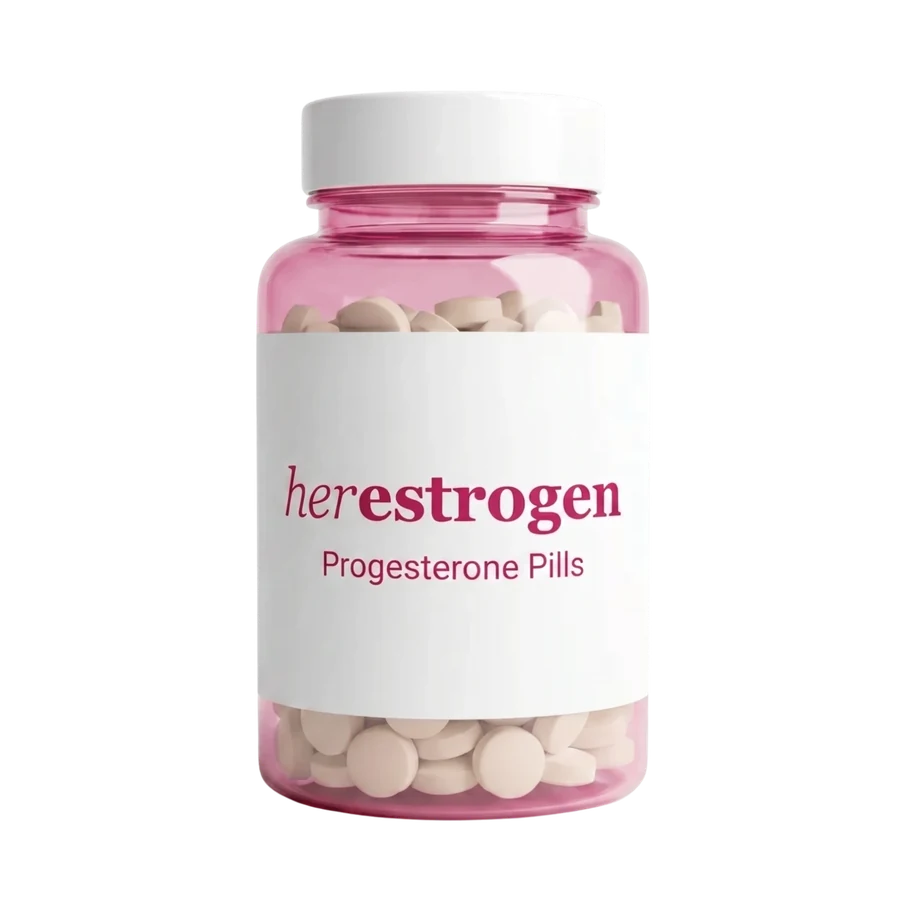 ProgesteroneRxMicronised progesterone, usually taken at night.
Alongside treatment
- Track symptoms against your cycle if you still have one; a pattern is useful clinical information.
- Strength training and daylight exposure both have evidence behind them for midlife mood.
- Hormone therapy is not a treatment for clinical depression — if you have thoughts of harming yourself, contact a clinician or call or text 988 now.
Questions women ask
Is this depression or menopause?
They overlap, and the difference matters because the treatments differ. A licensed clinician reviews your history and symptoms to work out which is driving what.
Can hormone therapy help mood symptoms?
For some women, treating the underlying hormonal change and the broken sleep improves mood too. It is not prescribed as an antidepressant, and a clinician decides whether it is appropriate for you.
Find out what is right for you
Answer a few questions about your health. A licensed clinician reviews your history and tells you whether treatment is appropriate — at no cost.
See if you’re eligibleSources & important information
This page is general education, not medical advice, and it does not replace an evaluation by a licensed clinician. Individual experiences vary. Prescription treatment is only provided when a licensed clinician determines it is appropriate for you; a prescription is not guaranteed. Compounded medications are not FDA-approved. The FDA does not review compounded medications for safety, effectiveness or quality before they are made available.
General background on menopause symptoms from ACOG, The Menopause Society and the National Institute on Aging. Duration and midlife weight figures reference the SWAN cohort.