Menopause symptoms
Brain fog & memory
Walking into a room and forgetting why, losing a word mid-sentence, rereading the same email three times. Brain fog is real, common, and usually temporary.
See if you’re eligibleFree clinician review. If treatment is not right for you, you pay nothing.
Why this happens
Estrogen receptors sit in the hippocampus and prefrontal cortex, areas involved in memory and attention.
Sleep loss from night sweats degrades exactly the functions women describe as fog.
Most studies find the effect is temporary, with cognition returning to baseline after the transition.
- ~60%of women report memory or concentration problems during the transition.
- Temporaryfor most women — cognition generally recovers post-menopause.
- Not dementia— the pattern is different, but persistent decline is worth a clinical review.
What can help
A licensed clinician reviews your health history and decides whether treatment is appropriate for you. These are the options women with this symptom are most often prescribed at HerEstrogen.
 Twice-Weekly PatchesRxEstradiol delivered through the skin, changed twice a week.
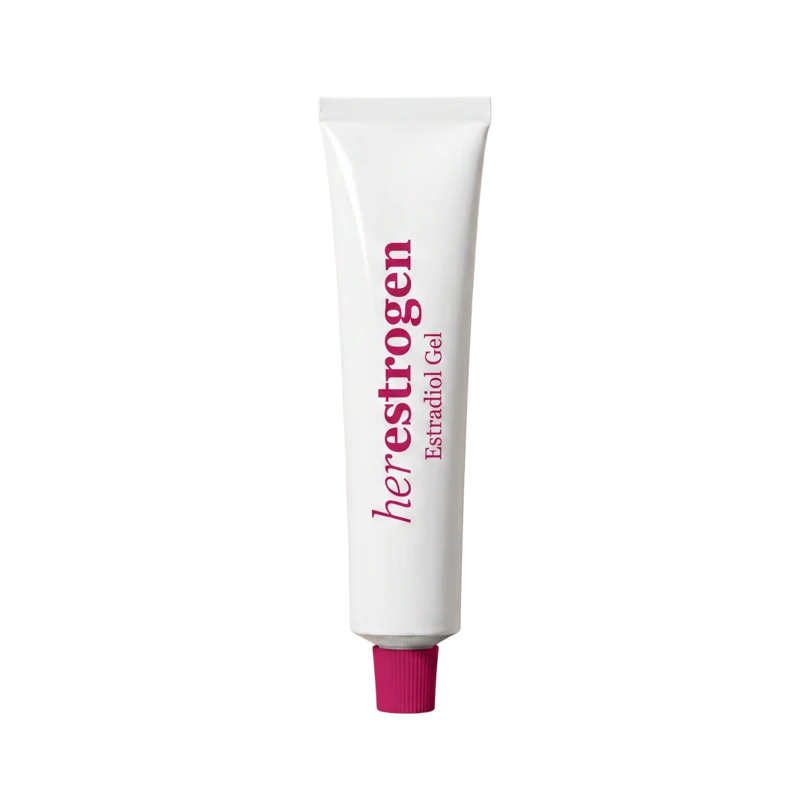 Daily GelRxEstradiol gel applied once a day, absorbs in minutes.
Alongside treatment
- Treating the night sweats that wake you often improves the daytime fog.
- Single-tasking and written lists reduce the load while symptoms are active.
- Sudden or worsening memory loss should be reviewed by a clinician rather than assumed to be hormonal.
Questions women ask
Is brain fog a sign of early dementia?
For the great majority of women, no. The menopause pattern is fluctuating and improves over time. Persistent or worsening decline deserves a clinical evaluation.
Will hormone therapy fix my memory?
Hormone therapy is not approved or prescribed as a memory treatment. Some women notice daytime clarity improves when the symptoms disrupting their sleep are treated.
Find out what is right for you
Answer a few questions about your health. A licensed clinician reviews your history and tells you whether treatment is appropriate — at no cost.
See if you’re eligibleSources & important information
This page is general education, not medical advice, and it does not replace an evaluation by a licensed clinician. Individual experiences vary. Prescription treatment is only provided when a licensed clinician determines it is appropriate for you; a prescription is not guaranteed. Compounded medications are not FDA-approved. The FDA does not review compounded medications for safety, effectiveness or quality before they are made available.
General background on menopause symptoms from ACOG, The Menopause Society and the National Institute on Aging. Duration and midlife weight figures reference the SWAN cohort.